Bone Loss in the Upper Jaw: What Is a Sinus Lift?

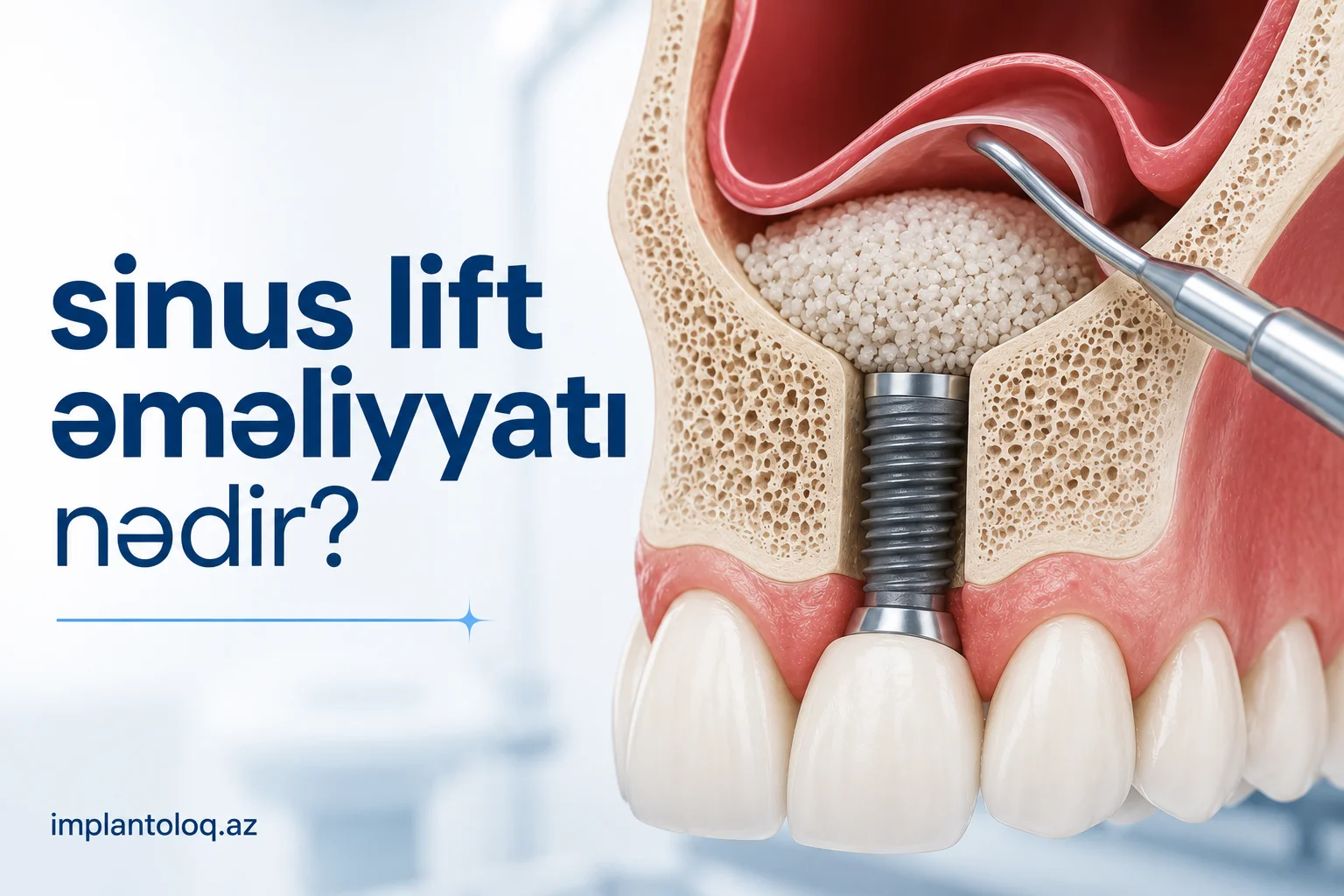
Bone loss in the upper jaw: what is a sinus lift?
In modern implantology, bone volume and quality are considered very important for placing a dental implant. Some people have too little bone, especially in the back of the upper jaw. In that case, additional procedures may be needed before implant treatment. One of these procedures is the sinus lift.
Many patients who visit an implantologist in Baku face bone loss in the upper jaw. When a tooth has been missing for a long time, bone volume gradually decreases and placing an implant can become difficult. In modern implantology, the sinus lift is widely used to solve this problem.
Here at implantoloq.az we provide detailed information about sinus lift surgery, bone grafting and the modern methods used in implantology.
What is a sinus lift?
A sinus lift is a surgical procedure performed to increase bone volume in the back of the upper jaw. During the surgery the floor of the maxillary sinus is carefully lifted and bone material is placed in that area.
The main goal is to create enough bone support for the implant. If there is too little bone in the back of the upper jaw, the implant may not sit stably.
In modern implantology, a sinus lift is used for:
- preparing for implant surgery,
- correcting a lack of bone,
- achieving long-term implant results.
These are the purposes it serves.
Why does bone loss happen in the upper jaw?
Bone loss can have different causes. Implantologists note that when tooth loss is left untreated for a long time, the jawbone gradually starts to shrink.
The most common causes are:
- long-term tooth loss,
- gum disease,
- age-related factors,
- injuries,
- anatomical features.
In some people the sinus naturally sits lower, so there may not be enough bone for an implant. In such cases a sinus lift can become an important stage of implant treatment.
Is a sinus lift painful?
One of the most common questions from people looking for an implantologist in Baku is whether a sinus lift hurts.
In modern implantology, a sinus lift is performed under local anaesthesia, so you do not feel pain during the surgery. Afterwards some sensitivity and mild swelling may occur.
Using modern technologies such as Piezo can provide:
- less trauma,
- a more comfortable procedure,
- faster healing,
- high precision.
This is one of the advantages of modern methods.
Many implantologists prefer Piezo technology for sinus lift surgery, because the system allows a gentler approach to the soft tissues.
When is a sinus lift needed?
Not every implant patient needs a sinus lift. The implantologist first assesses the bone with a 3D scan and other examinations.
The main indications are:
- a lack of bone in the upper jaw,
- not enough bone for an implant,
- a low-lying sinus,
- long-term tooth loss.
In modern implantology, correct planning is considered essential for implant success. In many cases, a sinus lift is what makes implant treatment possible.
How relevant is the sinus lift in implantology today?
In recent years, as interest in implant treatment has grown in Azerbaijan, sinus lift surgery has also become more widely used. Many people leave tooth loss untreated for a long time and so end up with bone loss in the upper jaw.
In modern implantology, bone support is considered very important for implant success. If bone volume is not sufficient, it can be hard to place the implant stably. That is why implantologists use the sinus lift procedure.
In some patients who visit an implantologist in Baku, bone loss is seen especially in the area of the upper back teeth. Modern technologies make it possible to solve this problem more safely.
How is a sinus lift performed?
A sinus lift is a procedure that requires special planning. In modern implantology, the sinus and the bone are analysed with a 3D scan before surgery.
During the surgery:
- the sinus membrane is carefully lifted,
- bone material is placed in that area,
- suitable bone support is created for the implant.
In some cases the implant can be placed in the same session. However, if the lack of bone is significant, a healing period may be needed first.
An experienced implantologist prepares an individual treatment plan for each patient, because bone condition and anatomy differ from person to person.
What is healing like after a sinus lift?
The technologies used in modern implantology help make healing more comfortable. In the first days after surgery, the following can be considered normal:
- mild swelling,
- sensitivity,
- a feeling of fullness.
This is the usual reaction of the tissues to surgery.
The implantologist usually advises the patient to:
- avoid heavy physical exertion,
- avoid putting pressure on the nose,
- take medication correctly,
- pay attention to oral hygiene.
Following this advice is important for healing.
Because modern methods such as Piezo technology cause less trauma, healing can be easier.
Is a sinus lift dangerous?
A sinus lift is considered a safe procedure when performed by an experienced implantologist. The digital planning and new technologies used in modern implantology help keep surgical risks to a minimum.
The most important things are correct diagnosis and professional planning. That is why, when choosing an implantologist, the following play an important role:
- experience,
- technical equipment,
- the technologies used,
- the clinic's approach.
Each of these points deserves attention.
For many people, a sinus lift is one of the key procedures that make implant treatment possible.
When was the sinus lift first used?
The sinus lift is one of the bone grafting procedures that has been used in implantology for many years. As implant treatment developed, new ways were explored to solve the problem of bone loss in the upper jaw.
In the past, many patients with a lack of bone could not have implant treatment. Thanks to the development of modern implantology, the sinus lift made it possible to create suitable bone support for an implant.
Today the sinus lift is one of the widely used modern procedures in implantology services in Baku.
Who needs a sinus lift most often?
A sinus lift is mainly performed in people with little bone volume in the back of the upper jaw. Bone loss is seen especially often in people who have been without teeth for a long time.
This problem is more common in:
- people who have lived with missing teeth for many years,
- people who have worn a denture for a long time,
- patients who have had gum disease,
- people who lose bone with age.
These are the groups in which a sinus lift is needed more often.
In some cases, a lack of bone is linked to genetics and anatomy. In modern implantology, bone condition is analysed precisely with a 3D scan.
How does a sinus lift affect implant success?
Sufficient bone support is essential for an implant to be long-lasting and stable. If an implant is placed in weak bone, the risk of problems later on can increase.
A sinus lift can help with:
- more stable implant placement,
- a long-term result,
- restoring chewing function,
- better aesthetic results.
That is why this surgery matters for implant success.
With correct planning, an experienced implantologist aims to make implant treatment safer and more successful.
How has the sinus lift developed in modern implantology?
In the past, sinus lift surgery was considered a more traumatic procedure. In modern implantology, new technologies have made it more comfortable.
Today the following are widely used in sinus lift procedures:
- Piezo technology,
- digital planning,
- 3D scanning,
- modern bone materials,
- plasma technology.
All of these have become part of modern practice.
These technologies can provide:
- higher precision,
- less trauma,
- faster healing,
- more comfortable treatment.
All of this makes treatment easier for the patient.
As implantology services have developed in Azerbaijan, sinus lift surgery has also started to be performed with more modern methods.
This is general information. Your suitability, treatment time and cost are assessed individually during an examination.