The Importance of Computed Tomography (CT) in Implant Treatment: Why 3D Diagnostics?

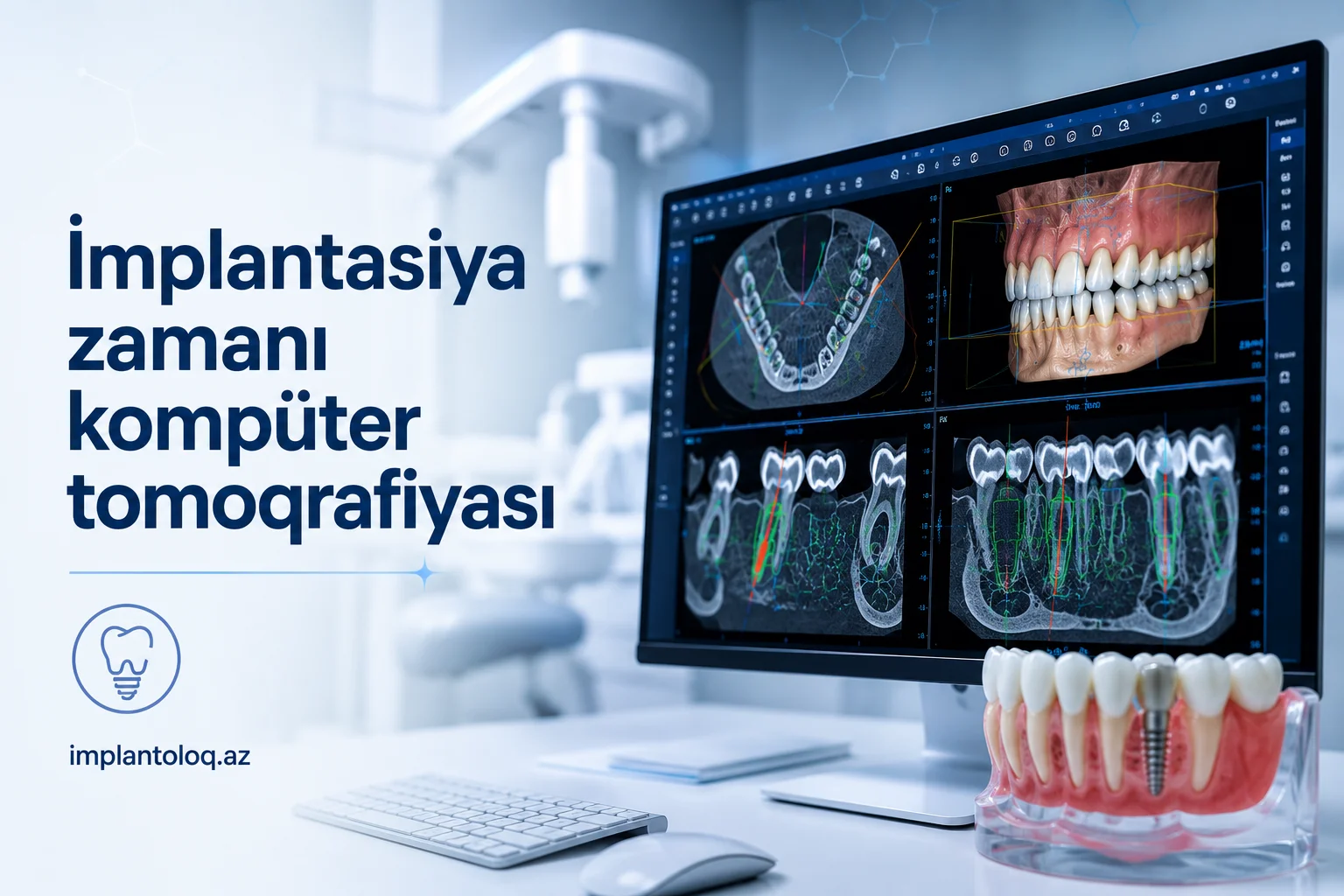
The Importance of Computed Tomography (CT) in Implant Treatment
In modern dentistry, dental implant treatment is considered one of the procedures that require high precision. Choosing a quality implant system alone is not enough for an implant to succeed. One of the most important stages is correct diagnosis. This is exactly why, in recent years, computed tomography (CT) during implant treatment has become an integral part of dentistry.
In the past, dentists mainly used conventional X-ray images. But a two-dimensional X-ray did not always show the condition of the jawbone with full accuracy. In some cases this could lead to the implant being placed at the wrong angle or to additional risks. Modern 3D computed tomography lets the doctor see the structure of the patient's jaw in full detail.
Computed tomography precisely determines:
- the height of the bone,
- its width,
- its density,
- the position of the sinuses,
- the position of the nerve canals.
This information is essential for placing the implant safely and correctly.
One of the biggest risks in implant treatment is nerve damage. Implant planning needs great care especially in areas of the lower jaw close to the main nerve canal. If the doctor does not assess this area accurately, the patient may develop numbness, loss of sensation and other complications. CT images help keep these risks to a minimum.
In the upper jaw, the condition of the sinuses is especially important. In some patients, because bone volume is low, a sinus lift may be needed before the implant. Without computed tomography, it is difficult to assess this situation correctly.
Another advantage of 3D diagnostics is that the implant size and placement angle can be planned in advance. Before surgery, the doctor can place the implant virtually and choose the most suitable option. This both shortens the operation and increases the success rate.
Many patients do not fully understand why a CT scan matters and think a conventional X-ray is enough. In implantology, however, millimetre-level precision plays a big role. A small error can later lead to implant failure and additional procedures.
In modern implantology, safety and long-term results are the main priorities. That is why, in professional clinics, a 3D CT scan before implant treatment has become almost a standard procedure.
How Does 3D Computed Tomography Make Implant Treatment Safer?
Correct planning is one of the key conditions for a successful implant result. This is exactly why 3D computed tomography is so important in modern implantology. This technology allows the doctor to analyse in detail not only the teeth but the entire anatomy of the jaw.
While conventional X-ray images provide only two-dimensional information, CT produces a three-dimensional image of the jaw. This helps assess the condition of the bone tissue more accurately. The doctor can plan in advance in which area, at what depth and at what angle the implant should be placed.
In some patients, when a tooth has been missing for a long time, the jawbone shrinks. In such cases there may not be enough bone to place an implant. Computed tomography helps detect bone loss at an early stage and, if needed, plan bone augmentation procedures.
3D diagnostics also plays an important role in preventing unexpected risks during implant surgery. For example:
- a nerve canal located close by,
- insufficient bone width,
- hidden areas of inflammation,
- cysts or other pathologies
are seen much more clearly on CT images. When these problems are detected in advance, the surgery is carried out more safely.
In modern clinics, CT data is analysed with special software. Using virtual planning, the doctor can carry out the implant placement on a computer beforehand. This technology is called “digital implantology” and is considered a major advance in implant treatment in recent years.
Thanks to digital planning, the risk of placing the implant incorrectly is reduced to a minimum. This has a positive effect both on the aesthetic result and on how long the implant lasts. 3D diagnostics is even more important for front-tooth implants in particular, where millimetre-level precision matters.
Patients sometimes think a CT scan is dangerous because of radiation. In fact, the radiation level of modern dental CT devices is quite low and meets safety standards. And the precise information it provides is considered far more important than the possible risks.
The Advantages of CT in Implantology and Its Effect on a Healthy Result
Computed tomography is considered one of the most important diagnostic tools in modern implantology. This technology plays a big role not only during implant placement but also in achieving successful long-term results. Thanks to precise planning, the surgery goes more smoothly for the doctor and the risks for the patient are kept to a minimum.
One of the most important advantages is that the implant can be matched ideally to the jawbone. Because everyone's bone structure is different, a standard approach does not always give the right result. Using 3D CT images, the doctor can fully analyse the patient's anatomical features and prepare an individual treatment plan.
Placing the implant correctly matters not only for appearance but also for chewing function. If an implant is placed at the wrong angle:
- the prosthesis may not fit properly,
- pressure during chewing is not distributed correctly,
- extra load can build up around the implant.
These problems can later cause the implant to loosen or fail. This is exactly why modern implantology pays special attention to the planning stage.
Computed tomography also makes it possible to assess bone quality. Bone density may be high in some areas and weaker in others. Based on this information, the doctor chooses the size and type of implant. This approach helps the implant fuse more soundly with the bone.
3D diagnostics gives a particularly big advantage in complex cases. For example:
- in completely toothless jaws,
- when planning multiple implants,
- in patients with bone loss,
- in cases where a sinus lift is needed,
precise planning without a CT scan can be very difficult.
In some clinics, special surgical guides are made based on computed tomography. This technology allows the implant to be placed at a predetermined point with maximum precision. This approach shortens the surgery and makes healing more comfortable.
For the patient, a CT scan also has many advantages. Thanks to precise diagnosis, additional risks decrease, the surgery becomes more predictable and the likelihood of a successful result rises. This helps prevent future problems both financially and in terms of health.
In conclusion, computed tomography has become an integral part of modern implantology. 3D diagnostics is one of the most important stages for placing an implant safely, precisely and for the long term. Thanks to a professional approach and correct planning, the success rate of implant treatment increases significantly.
Is Implant Surgery Possible Without Computed Tomography?
Many patients ask whether computed tomography is mandatory before implant surgery. Technically, in some cases implant treatment can be done with a conventional X-ray alone. In modern implantology, however, this approach is now considered outdated and carries higher risks.
Today, 3D computed tomography is used in most professional dental clinics. The main reason is to plan the implant surgery with maximum precision. Without CT, the doctor may not be able to see the bone width and anatomical structures with full accuracy.
Especially:
- in patients with bone loss,
- for implants close to the sinus area,
- in areas close to the lower jaw nerve,
computed tomography is of great importance.
Risks can be higher in implant surgery carried out without tomography. That is why, in modern implantology, 3D diagnostics is considered an important standard both for safety and for a long-lasting result.
This is general information. Your suitability, treatment time and cost are assessed individually during an examination.