What Is a Dental Implant? An Implantologist Explains

What is a dental implant? (Key concepts and structure)
Losing teeth can cause serious problems, both for appearance and for health. In modern dentistry, one of the most effective solutions to this problem is the dental implant. In recent years implant treatment has become widespread in Azerbaijan and around the world, and experienced implantologists recommend it as one of the most reliable ways to restore teeth.
Many patients who lose a tooth do not know which treatment to choose. This is exactly where an implantologist's advice matters. The implantologist assesses the patient's bone, general health and mouth, and then prepares the most suitable treatment plan.
What is a dental implant?
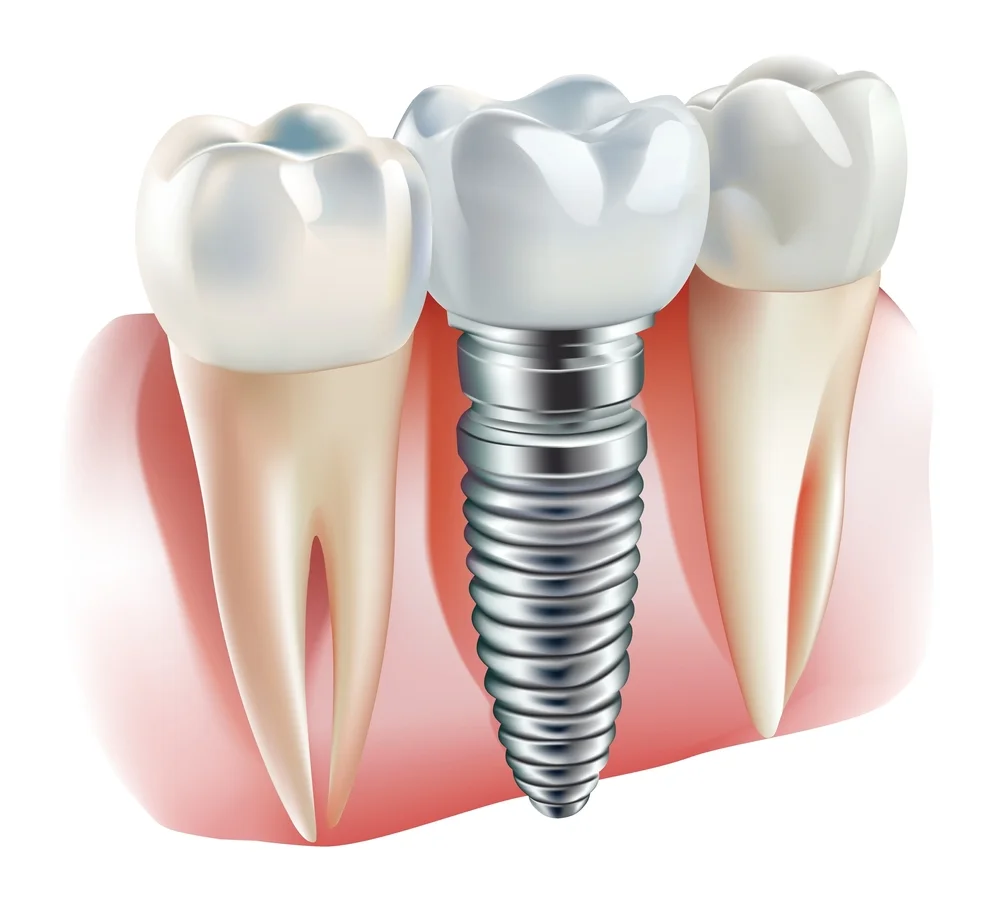
A dental implant is an artificial titanium structure that replaces the root of a lost tooth and is placed in the jawbone. The implant fuses with the bone, creates a solid base, and an artificial tooth is then fitted on top of it.
Put simply, an implant is an artificial alternative to the natural tooth root. Its biggest advantage is that, unlike other options, it becomes stable inside the bone and fully functional. When placed correctly by a professional implantologist, an implant does not differ from a natural tooth in either appearance or function.
Why are implants made of titanium?
Titanium is the most widely used material for making implants. The main reasons are:
- high compatibility with the human body
- a very low risk of allergy
- fast and strong bonding with the bone (osseointegration)
- long life and durability
These are the properties that make implantologists prefer titanium implants. In some cases, zirconia implants may also be used for a more aesthetic result.
The structure of a dental implant
A dental implant consists of 3 main parts, and each has an important job.
1. The implant (screw part)
This part is placed in the jawbone and acts as the tooth root. During surgery the implantologist secures it in the bone with special instruments. Over a certain period the implant then fuses with the bone.
2. Abutment
The abutment connects the implant to the crown. It is fitted onto the implant and provides a solid base for the prosthesis.
3. Crown
This is the visible part of the implant. It looks very much like a natural tooth and is made to match the colour of the patient's teeth. A good-quality crown plays an important role in a successful implant result.
What is osseointegration?
One of the most important stages of implant treatment is osseointegration. During this process the implant bonds biologically with the jawbone.
Thanks to this bond:
- the implant does not move
- strong chewing function is achieved
- a long-term, stable result is obtained
The implantologist keeps this stage under close watch to make sure it goes well. The process usually takes 2-6 months and can differ from patient to patient.
When are dental implants used?
Dental implants can be used in different situations:
- when a single tooth is lost
- when several teeth are missing
- in a completely toothless jaw
- as an alternative to removable dentures
- when the patient is unhappy with old bridges or dentures
This makes implants a very versatile and effective treatment. The implantologist takes an individual approach with each patient and chooses the most suitable option.
How implants differ from other options
The most common alternatives are bridges and removable dentures. However, an implant differs from them in several important ways:
- healthy teeth are not touched
- it is more stable and comfortable
- it lasts a long time
- it prevents bone loss
For this reason, modern implantologists regard the dental implant as the "gold standard" of treatment.
Aesthetic and psychological benefits of implants
Losing teeth can cause not only physical but also psychological problems. People may avoid smiling and lose self-confidence. Implants play an important role in solving these problems too:
- a natural smile is restored
- speaking becomes easier
- social comfort improves
- self-confidence grows
That is why implant treatment is not only a medical procedure but also one that improves quality of life.
Conclusion
A dental implant is not just a tooth treatment; it is a complete solution for both health and appearance. When planned and placed correctly by an experienced implantologist, an implant can be used for many years without problems and significantly improves the patient's quality of life.
How is a dental implant placed? (Stages explained by an implantologist)
Dental implant treatment is a complex but carefully planned procedure made up of several stages. When carried out properly by an experienced implantologist, it is safe and has a high success rate. Many people are afraid of implant surgery, but thanks to modern technology the procedure is actually easier than you might think.
Initial examination and consultation with the implantologist
The first and most important stage of implant treatment is the examination. At this stage the implantologist assesses:
- the condition of the jawbone
- the health of the teeth and gums
- your general medical condition
- previous dental treatments
An X-ray or 3D scan (CBCT) is usually used at this stage. These images allow the implantologist to see the thickness and density of the bone precisely.
A correct diagnosis is the foundation of a successful implant. That is why this stage must never be skipped.
Choosing an implantologist in Baku: how to choose a professional implantologist?
read more
Preparing the treatment plan
After the examination, the implantologist prepares an individual treatment plan. The plan answers the following questions:
- how many implants are needed?
- in which area will the implant be placed?
- are additional procedures needed (bone grafting, sinus lift, etc.)?
Because every patient's situation is different, there is no standard plan. A professional implantologist plans everything individually.
Surgical stage: placing the implant
The main stage is placing the implant in the jawbone. It is done as follows:
- Local anaesthesia is given
- The gum is opened
- A special site is prepared in the bone
- The implant (titanium screw) is placed in the bone
- The area is stitched
The procedure usually takes 20–40 minutes (per implant). With several implants it can take longer.
Important: you do not feel pain during the surgery. This is what worries patients the most, but in reality there is nothing to fear.
What happens after surgery?
Once the implant is placed, the recovery period begins. During this time:
- mild pain and swelling may occur
- discomfort for 2–3 days is normal
- the implantologist prescribes medication
In most cases patients return to normal life within 1-2 days.
The osseointegration stage
This is the most critical part of implant treatment. During this stage the implant fuses with the bone.
It usually takes:
- 2-3 months in the lower jaw
- 3-6 months in the upper jaw
depending on the jaw.
During this time the implantologist checks the implant and makes sure everything is going well.
Abutment and prosthesis stage
Once bonding with the bone is complete, the next stage begins:
1. The abutment is placed
This part is fitted onto the implant and serves as the base for the tooth.
2. An impression is taken
An impression is taken so the dental technician can make a matching crown in the laboratory.
3. The crown is fitted
The finished tooth is fixed onto the implant and the treatment is complete.
After this stage the patient can use it like a normal tooth.
How long does the implant process take?
It depends on the patient's situation:
- in simple cases: 2-3 months
- in more complex cases: 4-6 months or longer
If additional procedures are needed (for example bone grafting), it can take longer.
Is implant surgery painful?
This is one of the most common questions. To be honest: there is no need to be afraid.
- there is no pain during surgery (anaesthesia is used)
- mild pain after surgery is normal
- it is managed with ordinary painkillers
An experienced implantologist makes the process as comfortable as possible.
Who can have implants?
To be suitable for an implant:
- there must be enough jawbone
- serious chronic diseases must be under control
- oral hygiene must be good
In some cases the implantologist may recommend additional treatment.
Additional procedures that may be done with implants
Sometimes additional procedures are needed for an implant:
- bone grafting (bone graft)
- sinus lift
- an implant placed at the same time as a tooth extraction
These procedures are done to increase the implant's success rate.
Conclusion
Dental implant placement is a modern medical procedure carried out in planned stages. When performed by an experienced implantologist, the treatment is safe and gives long-term results.
The most important things are a correct diagnosis, good planning and the patient following the recommendations. In that case an implant can be used for years without problems.
🦷 Dental implants: benefits, risks and aftercare
Although the dental implant is considered one of the most effective treatments in modern dentistry, many people want to know its benefits, possible risks and aftercare rules before deciding. This is exactly when an experienced implantologist should inform the patient properly and set realistic expectations.
The main benefits of dental implants
Implant treatment is so popular because of the long-term, stable results it provides.
✔️ Natural look and comfort
The crown placed on the implant is matched as closely as possible to a natural tooth in shape and colour. This fully restores the look of your smile. With correct planning, you can hardly tell that the implant is artificial.
✔️ A long-lasting solution
With quality implants and proper care, implants can be used for 15-25 years, and sometimes even longer. This is a big advantage compared with other dental treatments.
✔️ Full restoration of chewing function
Because implants are anchored inside the bone, they allow you to chew as strongly as with natural teeth. This is especially important when back teeth are lost.
✔️ Prevents bone loss
After a tooth is lost, the jawbone gradually weakens. An implant puts load on the bone and so slows down or completely stops this process. This is one of the benefits implantologists emphasise most.
✔️ Protects neighbouring teeth
Unlike a bridge, an implant does not require healthy teeth to be ground down. This matters for long-term oral health.
Possible risks of dental implants
Like any medical procedure, implant treatment has certain risks. But to be clear: they are very rare and are mostly linked to improper treatment.
❗ Risk of infection
If hygiene rules are not followed after surgery, an infection can develop. That is why it is important to follow the implantologist's instructions strictly.
❗ The implant not bonding with the bone
In some cases the implant may not fully integrate with the bone. The reasons include:
- smoking
- poor bone quality
- incorrect placement
❗ Nerve or tissue damage
This happens very rarely and is mainly linked to inexperienced treatment.
The key point is that choosing a professional implantologist keeps these risks to a minimum. In other words, choosing the right doctor is half the success.
Aftercare rules after an implant
How long an implant lasts depends not only on the surgery but also on the care afterwards. This is where many patients go wrong.
Daily hygiene
- brush your teeth at least 2 times a day
- use dental floss
- use mouthwash
An implant needs the same care as a natural tooth.
Regular check-ups
A check-up with an implantologist or dentist at least 2 times a year is important. It helps prevent problems early.
Diet and habits
- be careful with very hard foods
- keep smoking to a minimum
- limit alcohol
These factors directly affect how long the implant lasts.
Factors that affect the price of an implant
The price of a dental implant is not fixed and depends on several factors:
- the brand and quality of the implant
- the implantologist's experience
- the clinic's technical equipment
- additional procedures (bone grafting, etc.)
A cheap implant is not always a good choice. The main goal here is a long-term result.
Who should not have implants?
In some cases implant treatment may be limited:
- patients with uncontrolled diabetes
- people with serious cardiovascular problems
- heavy smokers
- patients with weak bone structure
In these cases the implantologist may offer alternative treatments.
Conclusion
A dental implant is one of the most effective treatments from both an aesthetic and a functional point of view. Its benefits far outweigh its risks. However, the most important factors for a successful result are choosing the right implantologist, professional planning and the patient following the rules.
If you are looking for a long-lasting and comfortable solution for your teeth, a dental implant is one of the best choices.
This is general information. Your suitability, treatment time and cost are assessed individually during an examination.